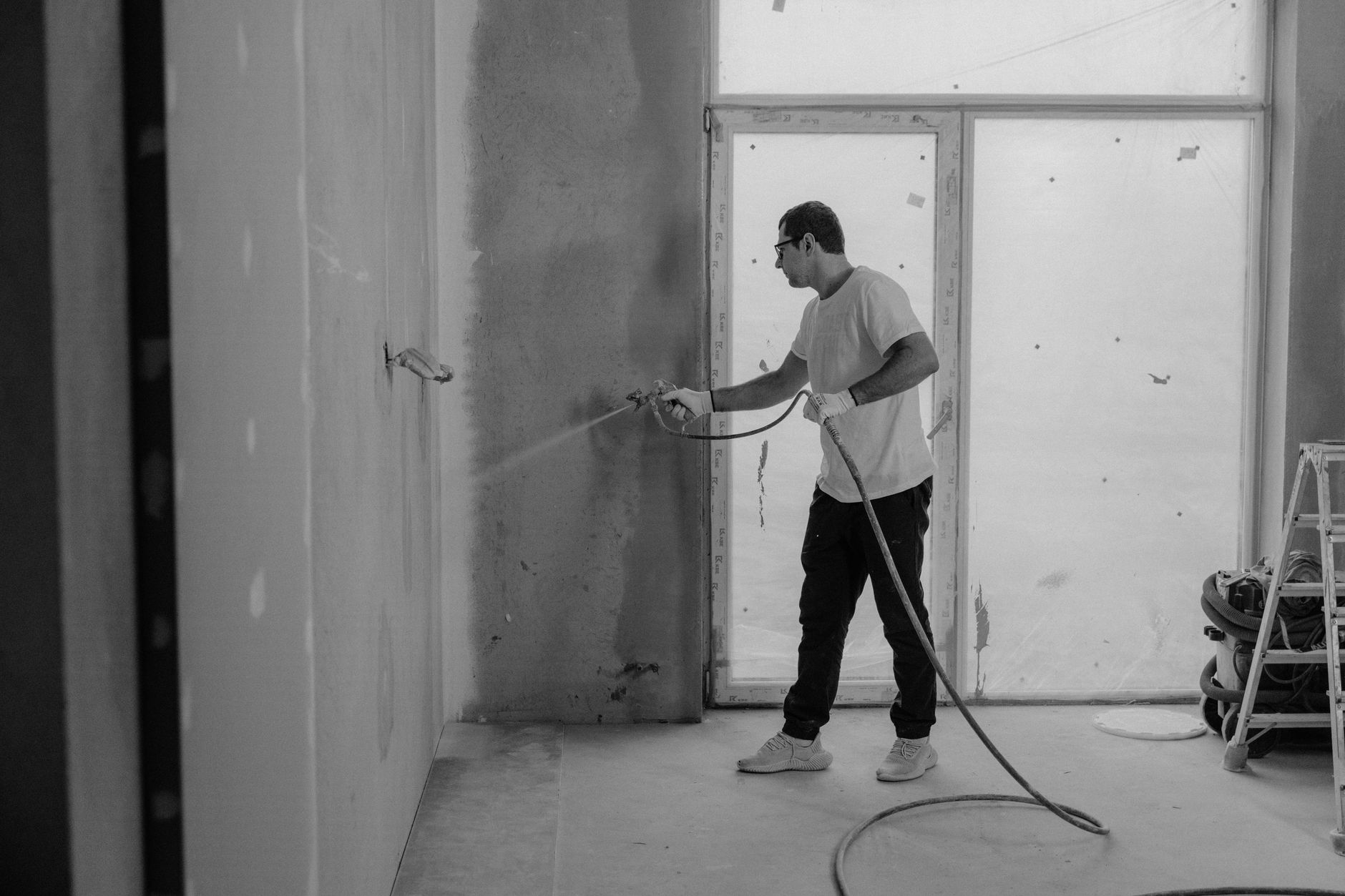
10% or 20% VAT on a renovation project: the simplified certificate without error
Complete guide for the construction tradesperson: conditions, steps, pitfalls and tax risks
In brief: Complete guide for the construction tradesperson: conditions, steps, pitfalls and tax risks
Note: this article describes French rules and figures (tax thresholds, social contributions, e-invoicing schedule). They do not apply outside France.

In brief: For a renovation project, a reduced VAT rate applies if the dwelling was completed more than two years ago and if the client has signed a simplified certificate. Without this certificate, the standard rate applies, without any possible exception. VAT on works, which rate to apply: the question comes up on almost all renovation projects. An incorrect rate on a quote is costly for the client and can expose you to a tax authority recovery. This guide details the conditions for the reduced rate, the works concerned, and how to complete the certificate without making a mistake.
Why does the VAT rate on a renovation project really concern you?
A difference in rate immediately changes the final price of a quote. On a project worth several thousands of euros, the difference between the reduced rate and the standard rate can sometimes amount to hundreds of euros for the client. An incorrect rate is never a simple administrative detail.
The exact percentage of the reduced rate and the standard rate is specified in the general tax code. Check it on the official tax website before preparing your quote. These rates may change.
A rate error exposes you to a VAT recovery, with regularisation and interest. It can also damage client trust, as they discover a higher-than-expected invoice. This guide answers point by point: conditions for the reduced rate, works and materials concerned, simplified certificate, frequent pitfalls. You will also see what Quickote concretely changes in your daily management.
When can you charge the reduced rate rather than the standard rate for a renovation?
The reduced rate does not apply to all works. It adheres to precise rules, linked to the age of the dwelling and the nature of the intervention. Three conditions must be met simultaneously.
The three criteria to check mandatory
- The dwelling was completed more than two years ago.
- The works relate to renovation or improvement, not new construction.
- The client declares a residential use: main residence, secondary residence, or rented dwelling.
These three points must all be true at the same time. If just one is missing, it reverts to the standard rate.
Exclusions that prevent you from accessing the reduced rate
New construction always remains at the standard rate. An extension that creates a new habitable surface follows the same rule, even if the rest of the dwelling is old. Premises for commercial or professional use are excluded from the reduced rate. Structural works, such as foundation or load-bearing structure repairs, often fall outside the scope of simple renovation.
Which works and materials are truly eligible for the reduced VAT rate?
The reduced rate applies to labour and materials you install, as part of a renovation. It does not apply to all equipment, even if installed during the same project.
Eligible works: domain by domain
- Electricity: renovation of an existing installation, replacement of electric heaters.
- Plumbing: changing pipes, replacing sanitary facilities.
- Heating: replacement of a standard boiler, installation of radiators.
- Joinery: changing windows, doors.
- Painting and floor or wall coverings.
- Insulation of attics, walls, or floors.
- Renovation of bathrooms and sanitary facilities.
These works are eligible when they renovate existing structures. As soon as they create a new surface, they switch to the standard rate.
Materials included or excluded from the reduced rate
| Included at reduced rate | Excluded, charged at standard rate |
|---|---|
| Cement, bricks, installed insulation | Household appliances (oven, washing machine) |
| Paint, floor coverings | Air conditioning, large heating equipment |
| Standard taps and fittings | Security equipment such as alarms, depending on the case |
Lighting and high-end taps and fittings remain borderline cases. Any doubt should always lead to verification, never approximation.
Costly pitfalls: confusion between works and supplies
Certain high-comfort equipment, such as oil-fired boilers or reversible air conditioning, remains at the standard rate even when installed during a renovation. The installation service may benefit from the reduced rate, but the supply of the appliance often remains at the standard rate. It is therefore necessary to distinguish, line by line, labour from invoiced supplies. Decorative works alone, such as wallpapering, generally follow the same logic as painting. They must remain within the scope of a renovation.
What the simplified certificate really is
The simplified certificate is a document signed by the client. It certifies that their dwelling meets the conditions for accessing the reduced VAT rate for renovation works. The client declares the age of the dwelling and its use. This document protects the client, who benefits from the correct price, and you, who apply the rate entirely legally.
Who is responsible for collection and retention
It is your responsibility to request the certificate and keep it. Accounting documents must be kept for 10 years from the end of the financial year. The certificate is part of these. Without it in your file, you must apply the standard rate, even if the works were actually eligible. In the event of a false declaration by the client, their responsibility is engaged. The certificate remains your best protection nonetheless.
How to complete the simplified certificate step-by-step without error?
Completing the certificate takes a few minutes, provided you follow a logical order.
Step 1: identify the works and check the property's conditions
Before quoting, check the completion date of the dwelling. A notarial deed, a property tax notice, or an old building permit are often sufficient to prove it. The dwelling must be located in France.
Step 2: accurately categorise the works in your quote
Separate, line by line, what falls under eligible renovation and what remains at the standard rate. Two distinct pre-tax amounts are always better than a rate applied globally, without distinction.
Step 3: fill in each field of the certificate without error
- Exact address of the property.
- Completion date of the dwelling.
- Declared use: main residence, secondary, or rental.
- Mention that the dwelling was completed more than two years ago.
- Client's signature and date.
Step 4: obtain the client's signature at the right time
The best time is before the start of the works, when quoting. Simply explain to the client that this signature determines the final price. Always keep the original, and give a copy to the client.
Supporting documents to request and archive
- Copy of the notarial deed or proof of construction date.
- Dated photo of the facade.
- Property tax notice.
- Recent electricity bill, as proof of occupancy.
Which pitfalls most often trigger a recovery?
Certain errors constantly recur on renovation projects. They remain avoidable, provided you know them.
Pitfall 1: mixing works at the reduced rate and supplies at the standard rate on the same invoice
Many quotes apply a single rate to the entire invoice, for simplicity. On renovation quotes processed via Quickote, this confusion remains the most common error identified. A line for household appliances or air conditioning sometimes slips into the reduced rate, often without malicious intent. A heterogeneous invoice, without line-by-line detail, complicates justification during an audit.
Pitfall 2: not requesting or losing the simplified certificate
A hurried client sometimes refuses to sign, or the certificate gets lost among project documents. Without it, the recovery applies to the entire project, at the standard rate.
Pitfall 3: applying the reduced rate to ineligible supplies
Air conditioning, ovens, or washing machines are never at the reduced rate, even when installed during a renovation. The confusion often comes from too broad a notion of basic supplies.
Pitfall 4: invoicing client-provided material with VAT
When the client provides their own materials, you only invoice labour. Applying VAT to material you have not sold makes no legal sense.
Pitfall 5: splitting a project to circumvent thresholds
Issuing several small invoices for the same project, without a real reason, attracts attention. The administration easily reconstructs the entire project and applies the recovery to the totality.
How the administration detects VAT errors
The administration compares your quotes and invoices with the retained certificates. The absence of a document, or a rate applied to visibly new works, triggers requests for additional supporting documents.
Fines and penalties for incorrect rate application
There is no fixed scale for a VAT rate error. The recovery applies to the difference between the standard rate and the applied rate, plus late interest. In case of deliberate failure, a 40% surcharge is added, increased to 80% in case of fraudulent manoeuvres or undeclared activity.
Duration of the recovery and consequences for your business
The administration has a legally defined period to initiate this type of recovery. This is called the limitation period. VAT recovery directly impacts your cash flow, as you must regularise the difference. An official notification informs you of the reasons, and you retain a right of reply before any final decision.
You must apply the standard rate: that's the rule
Without a signed certificate, you have no proof of the reduced rate. You then invoice at the standard rate, even if the works appear eligible. The client pays more, but you remain compliant.
How to explain to the client why you need their certificate
The certificate protects both parties. It proves that the reduced price is justified and avoids a posteriori VAT recovery, which would indirectly impact the commercial relationship.
Strategies to convince and secure the agreement
Explain the logic from the quote stage, before any commitment. Offer to assist with completion, in a few minutes, during the appointment. Systematically keep a signed copy, in addition to the original.
Specific cases in construction renovation
Certain situations fall outside the simple framework of a tradesperson invoicing their client directly.
Subcontracting: how to apply the correct VAT rate
In subcontracting, it is the project owner, the end client, who must have signed the certificate. Your invoice to the principal applies the same rate as that justified by this certificate. The responsibility for checking the conditions remains shared between you and the main tradesperson.
Materials supplied by the client or the principal
If the client provides the materials themselves, you only invoice for your labour. No VAT is due from you on material you have not sold. For a mixed project, clearly separate the two amounts.
Deposits and project splitting
A deposit generally follows the rate planned for the final project. If the works carried out ultimately do not meet the conditions for the reduced rate, the difference must be regularised on the final invoice.
How Quickote helps you invoice accurately without error?
A poorly structured quote is often the cause of rate errors. Quickote is a quoting and invoicing application designed for construction tradespeople. It structures each document from creation, with voice dictation, to limit this risk.
Quote templates and invoices compliant with renovation VAT
Quickote quote templates clearly separate works lines from the amount of supplies. You can thus apply the reduced rate to eligible labour. The standard rate remains reserved for excluded equipment, without mixing the two on the same line. Quickote génère vos factures au format Factur-X. Le raccordement à une Plateforme Agréée, nécessaire à l'émission obligatoire de septembre 2027, est en cours de finalisation.
Project tracking and archiving of the simplified certificate
Each project keeps its own history in Quickote: quotes, invoices, and applied rates. You can quickly find useful documents if a client, or the administration, requests them.
In summary
The reduced rate requires a dwelling completed more than two years ago, renovation works, and a signed simplified certificate. Before each project, check these three conditions, detail your quote line by line, and keep the certificate for 10 years.
- Dwelling completed more than two years ago: to be checked.
- Renovation works, not new construction: to be checked.
- Simplified certificate signed before works: to be obtained.
- Detailed quote, rates separated by line: to be prepared.
- Document archived for 10 years: to be kept.
With Quickote, you can prepare this quote in minutes, without mixing up the rates.
Frequently asked questions
Sources
- Reduced VAT rate: for which works? | economie.gouv.fr
- Which VAT rate to apply for works carried out in dwellings...
- Taxes — professionals' area
- Entrepreneurship — Service-Public (business procedures)
- Auto-entrepreneur — contributions and declarations (Urssaf)
- Electronic invoicing (impots.gouv.fr)
- Quickote — official website
Apply the correct VAT rate to every project
Quickote helps you invoice with the right details and rates, without spending your evenings on it.
Essayer Quickote gratuitement