VAT for micro-enterprises: the complete guide to never making a mistake
Almost all micro-entrepreneurs do not charge VAT at their start thanks to the basic exemption, a scheme distinct from the micro-entrepreneur status itself. This exemption is not permanent: it depends on regularly revised turnover thresholds, and crossing them immediately changes your invoicing and declaration obligations. This guide explains, step by step, how to know where you stand, what to do when you switch, and how to never be caught off guard.
The basic VAT exemption: the default scheme for micro-entrepreneurs
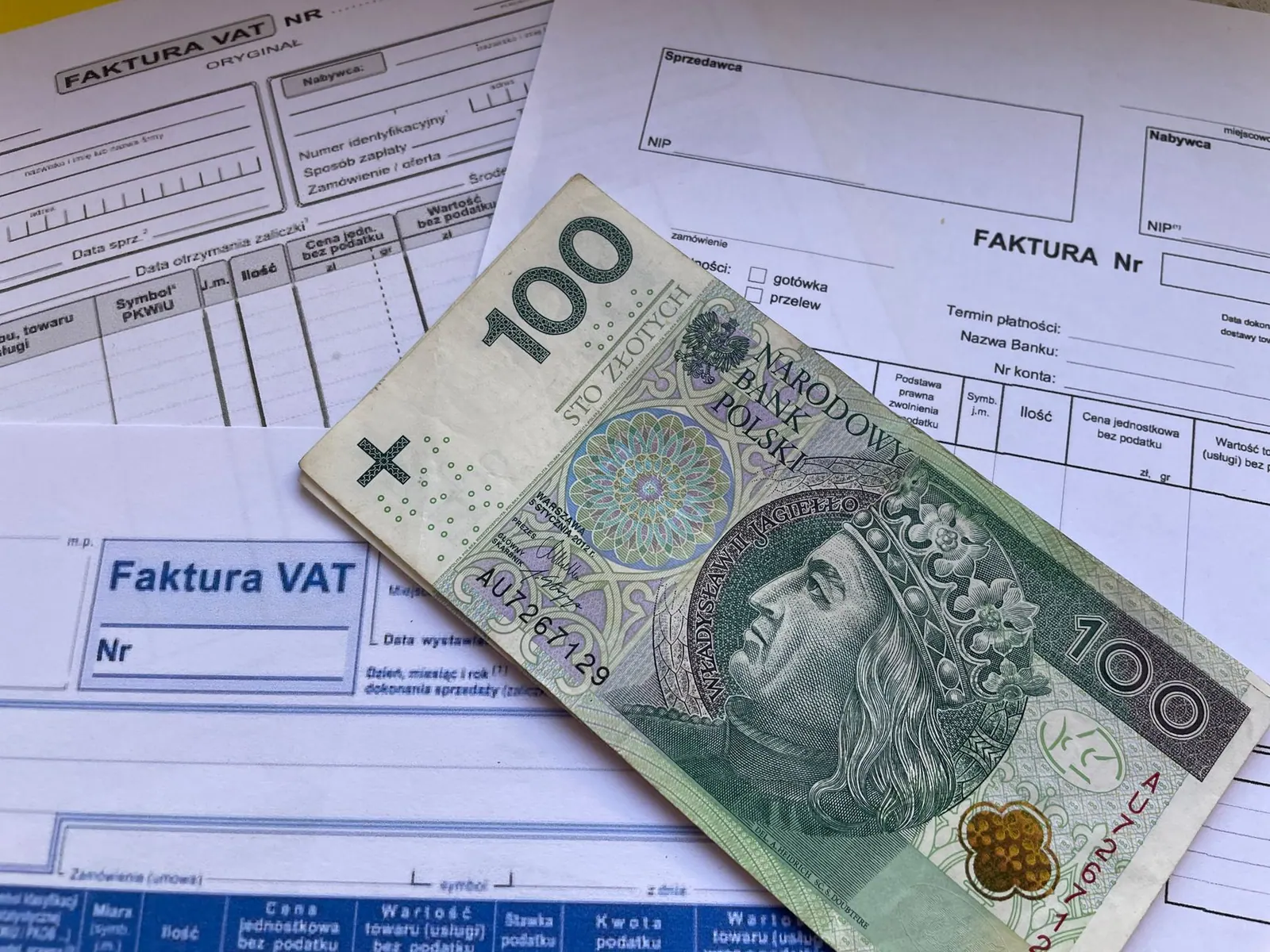
If you have just created your micro-enterprise and do not charge VAT to your clients, there is nothing abnormal or irregular in your practice. It is even the most frequent situation. The vast majority of micro-entrepreneurs start under what is called the basic VAT exemption, a scheme that purely and simply exempts them from collecting this tax.
Concretely, this means two things. First, you do not charge VAT to your clients: your prices are net, with no VAT line to add. Second, in return, you cannot recover the VAT you yourself pay on your professional purchases, whether it's equipment, supplies, or subcontracted services. You buy and sell VAT included, without ever having it pass through your accounting.
This exemption is not a silent option: it must appear in black and white on each of your invoices. The mention to include is precise and mandatory: " TVA non applicable, article 293 B du Code général des impôts ". Its absence is an irregularity, even if it changes nothing in the substance of your tax situation as long as you remain below the thresholds. If you are just starting out, simply check that this phrase appears on your invoice template; it is often the only reflex to have during the first years of activity.
Basic VAT exemption and micro-fiscal scheme: two concepts not to be confused
A confusion very often arises among entrepreneurs discovering taxation: thinking that "micro-entrepreneur" and "no VAT" are one and the same thing. This is not accurate, and understanding the difference avoids many misunderstandings later on.
The micro-fiscal scheme, which allows you to declare your professional income with a flat-rate allowance and contribute according to a simplified percentage of your turnover, concerns income tax and social contributions. The basic VAT exemption, on the other hand, concerns a totally different tax, managed by its own rules and thresholds.
These two mechanisms coexist for most micro-entrepreneurs, which fosters the idea that they are one. But they evolve independently of each other. You can remain a micro-entrepreneur from a social and fiscal perspective while becoming liable for VAT, simply because your activity has grown. So remember this: your status does not protect you from VAT; it is a specific scheme, the basic exemption, that exempts you as long as certain turnover conditions are met.

Turnover thresholds to know to remain exempt
The basic VAT exemption is not acquired indefinitely. It relies on a system of turnover thresholds that you must monitor yourself; no automatic alert will warn you before the overrun.
The logic works with two levels. A reference threshold, which corresponds to the normal ceiling of the exemption, and an increased threshold, higher, which offers tolerance in case of a temporary overrun of the first. These two thresholds are not simple theoretical benchmarks: they trigger concrete and sometimes immediate consequences on your obligation to charge VAT.
An essential point: these amounts are periodically revised by the tax authorities, and they differ according to the nature of your activity. The only way to know the exact threshold that applies to your situation today is to consult official sources, impots.gouv.fr and service-public.fr, which publish and update these ceilings. Make it a habit to check these amounts at least once a year, ideally at the beginning of the fiscal year.
Different thresholds depending on your activity (sales, service provision, liberal professions)
Not all micro-entrepreneurs are treated equally when it comes to the basic exemption. The applicable ceilings vary depending on the category of activity carried out, with a classic distinction between sales of goods and provision of accommodation on the one hand, and service provisions and liberal professions falling under non-commercial profits on the other.
This distinction has a direct practical consequence: even before you start monitoring your turnover counter, you need to know precisely which category your activity falls into. A consultant, a craftsman who sells products he manufactures, and a liberal professional do not apply the same ceiling, and an error of judgment on this point can make you think you are safe when you are already approaching a lower-than-expected threshold.
If your activity mixes several types of services, for example sales and services, specific calculation rules also apply, with an overall ceiling and a sub-ceiling specific to one of the two categories. Again, it is better to check your specific case on official resources rather than relying on a generality that concerns a different type of activity than yours.
The increased threshold (tolerance): a margin, not total security
The increased threshold exists to prevent a single, moderate overrun of the reference threshold from immediately shifting an entrepreneur into the VAT regime. It is a tolerance valve, designed for normal variations in activity from one year to the next.
But this mechanism is often misunderstood. Many micro-entrepreneurs interpret it as a comfortable second ceiling, a kind of true threshold not to be exceeded, forgetting that the first threshold also has real legal value. Exceeding the reference threshold has consequences, even if they are not as immediate as those of an overrun of the increased threshold. It's not because you remain below the tolerance ceiling that nothing happens: you enter a zone of increased surveillance.
The increased threshold is therefore not a safety net on which to build a growth strategy. It is a temporary margin for maneuver, intended to absorb an exceptional peak in activity, not a goal to aim for every year. The healthiest reflex remains to consider the reference threshold as your true vigilance benchmark, and the increased threshold as an absolute limit never to be crossed without anticipation.
How to calculate the turnover to compare to the threshold (case of the first year of activity)
If you created your micro-enterprise during the year, a question systematically arises: should you compare your actual turnover to the full annual threshold, even if you only worked a few months?
The answer is based on the pro rata temporis principle. For your first year of activity, the applicable threshold is adjusted to the number of days actually worked from your start date of activity until the end of the calendar year. An entrepreneur starting in September therefore does not have the same absolute ceiling as a colleague who started on January 1st: their threshold is mechanically reduced proportionally to the period actually covered.
This rule has an important consequence: a turnover that seems modest over a few months can actually represent an annual rate much higher than the threshold, and therefore trigger an overrun earlier than expected. This is why you should never wait until December 31st to make this calculation. The right reflex is to monitor your cumulative turnover in real time, month after month, and regularly compare it to the prorated threshold that concerns you. A simple tracking table, updated with each invoice issued, is more than enough to avoid any unpleasant surprises.
You exceed the threshold during the year: what to do, and from when?
Exceeding an exemption threshold is not a disaster, but it is a pivotal moment that requires responsiveness. Two scenarios are possible, and they do not entail at all the same timeline or the same urgencies.
The first case concerns an overrun of only the reference threshold, without crossing the increased threshold. The second concerns a direct overrun of the increased threshold, which is treated much more strictly by the administration. In both cases, the procedure begins with the same step: noting the overrun as soon as it occurs, thanks to your turnover monitoring, rather than discovering it retrospectively when doing your year-end accounts.
Once the overrun is identified, the logic is always chronological. You must first precisely determine from what date you become liable for VAT according to the scenario that applies to you, then immediately adapt your invoicing from that date, and finally initiate the necessary administrative procedures to formalize this change of situation.
Exceeding the basic threshold vs. exceeding the increased threshold: two different timelines
This is where the distinction between the two thresholds takes on its full practical meaning. When you exceed only the reference threshold, without reaching the increased threshold, a delay is generally granted before you actually become liable for VAT. This delay exists precisely because this type of overrun is considered a normal variation of a growing activity, and not a sudden change in scale.
On the other hand, when turnover directly crosses the increased threshold, or when the reference threshold is continuously exceeded beyond the planned tolerance, the switch is much faster. In this scenario, the obligation to charge VAT applies from the month in which the increased threshold overrun is observed, without an adjustment period.
This difference in timeline explains why it is essential to know, at all times, which of the two thresholds concerns you. An entrepreneur who thinks they benefit from a delay when they have actually crossed the increased threshold risks invoicing services without VAT that, retroactively, should have included it. Since the exact dates and deadlines applicable to each situation are specified by the tax authorities, checking on impots.gouv.fr at the very moment of the overrun remains the safest reflex to avoid making a mistake in the timeline.
Steps to take with the tax authorities
Once the overrun is observed and the date of subjection identified, several concrete steps must be taken without delay. The first consists of reporting this change of situation to the tax authorities, generally from your online professional space, so that your file reflects your new VAT status.
The second step, often necessary when you work with clients or suppliers established in other European Union countries, is to request the assignment of an intra-community VAT number. This number will be useful even for a part of your purely national activity, as it becomes a mandatory mention on your invoices as soon as you are subject.
Finally, you will have to choose, or you will be assigned depending on your level of activity, a VAT declaration scheme. All these procedures are accessible and documented on the tax website, which remains the reference to consult to know the exact procedure and the forms to use when you need them.
Adapt your invoices as soon as you become subject to VAT
The day you become liable for VAT, your invoicing method changes profoundly, and this change must be effective immediately, not "at the next invoice that suits you." This is probably the most concrete and riskiest step in case of error, as it directly affects your clients and your collected income.
First visible change: the basic exemption mention disappears from your invoices, as it no longer corresponds to your actual situation. It is replaced by a classic invoicing architecture, with a pre-tax amount, a VAT rate and amount, then a total including all taxes. Your net prices do not necessarily change in displayed value to the end client, but their accounting breakdown changes completely.
The most important point of vigilance concerns quotes and invoices in preparation at the precise moment of the switch. A quote signed before your change of status, but whose corresponding invoice is issued after, must in principle include VAT if the invoicing date is after your date of subjection. This is a frequent source of error, which can cost you dearly if you invoice without VAT for a service that, fiscally, should have included it.
Mandatory mentions to add (VAT number, rate, pre-tax and all-tax amounts)
As soon as you are subject, your invoice must include a certain number of mentions that were not necessary before. Your intra-community VAT number must appear there, as must that of your client if it is a transaction with a company established in another European Union country. The applied VAT rate must be clearly indicated for each line of service or product, as well as the corresponding VAT amount.
Your invoice must now distinctly present the pre-tax amount, the VAT amount, and the total amount including all taxes, whereas previously a single net amount was sufficient. This presentation is not a simple matter of form: the absence of these mentions, or an error in their calculation, exposes you to penalties and can complicate, or even invalidate, the fiscal validity of the invoice for you as well as for your client.
It is therefore essential to update your invoice template from the switch date, and to check each invoice issued in the first few weeks to ensure that no mention has been forgotten due to habit of the old format.
Which VAT rate to apply depending on your activity
Contrary to popular belief, there is no single VAT rate applicable to all activities. Several rates coexist in France, and the one that concerns you depends directly on the nature of the good sold or the service performed. One rate applies to the majority of goods and services, but reduced rates exist for certain specific categories, whether it concerns certain products, certain services related to housing or catering, or other sectors precisely defined by regulations.
Rather than applying a default rate randomly or by analogy with what a colleague from another sector practices, the only reliable approach is to check the exact rate applicable to your specific activity on the official resources of the tax administration. Some activities may even fall under several different rates depending on the type of service invoiced within the same company, which reinforces the interest of this case-by-case verification. A rate error, even made in good faith, remains an invoicing error that may require a subsequent correction.
Managing the transition: ongoing quotes, clients to notify, invoices already issued
The transition period requires particular attention, as this is where most errors occur. For quotes already signed before your change of status, but whose execution or invoicing occurs afterward, systematically check if VAT must now apply. If so, it is better to inform your client before issuing the invoice rather than discovering it on the final document: a price increase related to VAT, even if legally justified, is always better managed when anticipated and explained.
Notifying your regular clients of this change of status, even briefly, is a sign of professionalism that avoids misunderstandings. For client companies themselves subject to VAT, this change is often good news, as they will be able to deduct the VAT you now charge them.
Finally, if an error still slips into an already issued invoice, the correction is made via a corrective invoice, and not by a simple modification of the original document. To avoid a cascade of corrections that complicates your accounting and that of your clients, take the time to check each item before sending during the first few weeks following your switch, rather than correcting after the fact.
Declare and remit collected VAT: schemes and deadlines
Becoming liable for VAT is not limited to modifying your invoices. It also commits you to a regular cycle of declaration and remittance to the tax authorities. The basic principle is simple to understand, even if its implementation requires rigor: the VAT you collect from your clients does not belong to you; it must be remitted to the State, after deducting the VAT you yourself paid on your professional purchases. The difference between these two amounts constitutes the VAT due, or, in certain cases, a VAT credit in your favor.
For a former franchisee discovering this mechanism, several declaration schemes exist, with different filing frequencies depending on the level of activity and the chosen or assigned scheme. We will not give precise dates here, as these deadlines are set by the tax authorities and may vary according to your individual situation: the only reliable way to know your exact calendar is to consult your professional space on impots.gouv.fr, which precisely indicates your scheme and your next deadlines.
Which declaration scheme applies to your situation
Two main families of VAT declaration schemes coexist for businesses. The simplified scheme, designed for structures whose activity level remains moderate, eases the frequency of procedures by reducing the number of declarations to file over the year, with an installment mechanism and an annual regularization. The normal scheme, intended for companies with higher turnover, requires more frequent declarations, with a calculation of VAT due at each deadline.
The scheme that applies to you depends mainly on your turnover level and, in some cases, the amount of VAT you are required to remit. It is not necessarily up to you to choose arbitrarily: the administration determines the applicable scheme according to precise criteria, even if some choice options exist in particular cases. Your online professional space clearly indicates under which scheme you are placed, and this is the information to check first as soon as you become subject.
How to complete and submit your VAT declaration
The practical declaration process takes place entirely online, from your professional space on the tax website. Depending on your scheme, you will need to fill out a specific form, on which you indicate the amount of VAT collected on your sales for the period, then the amount of deductible VAT on your professional purchases for the same period. The difference between these two amounts determines the sum you must remit, or, if your deductible expenses were higher than your collection, the credit you can benefit from.
This calculation is not complex in itself, but it requires having kept and classified all your invoices, both those issued to your clients and those received from your suppliers. This is precisely where the interest lies in maintaining regular tracking, ideally with each invoice, rather than attempting a complete reconstruction just before the deadline. An entrepreneur who centralizes their supporting documents as they go spends a few minutes filling out their declaration; one who waits until the last week finds themselves gathering months of documents in a hurry, with a significantly higher risk of error or omission.
Respect deadlines to avoid late payment penalties
Each declaration scheme comes with its own schedule, which you must know precisely for your own situation. A forgotten declaration, or a late submission, is never insignificant from a tax perspective: it exposes you to penalties that are added to the amount of VAT due, and can, if repeated, draw the administration's attention to your entire file.
The best protection against this risk remains simple: know your personal schedule as soon as you switch to the VAT regime, note the dates in your professional agenda, and anticipate the time needed to gather your supporting documents before each deadline. The precise deadlines applicable to your scheme are indicated in your professional space and on the dedicated pages of impots.gouv.fr. A simple automatic reminder a few days before each deadline is often enough to almost entirely eliminate this risk.
Recovering VAT on your professional purchases
The switch to VAT has a positive side that many micro-entrepreneurs discover with relief: the possibility of recovering the VAT paid on their professional expenses. Under the basic exemption, this VAT was a definitive charge, integrated without distinction into the price paid. Once subject, it becomes deductible VAT, meaning an amount that you can subtract from the VAT you collect from your clients.
This mechanism concretely changes the economic equation of certain investments. A significant professional equipment purchase, for example, actually costs less once the VAT is recovered, which can make an investment relevant that was not necessarily so under the exemption scheme.
However, this deduction is neither automatic nor unconditional. It first requires having a compliant invoice, issued in your company name, clearly stating the amount of VAT paid. It then requires that the expense corresponds to a real and justifiable professional use, and not to a mixed or personal use disguised as a professional purchase. These two fundamental conditions are verified by the administration in case of control, and their non-compliance can lead to an adjustment of the VAT amount incorrectly deducted.
Expenses eligible for deduction, and those excluded
Generally, expenses directly related to the exercise of your activity, professional equipment, supplies, subcontracting services, software used in your work, are eligible for VAT deduction, provided you have a proper invoice.
Conversely, certain expenses are excluded from the right to deduction in principle, regardless of their link to your activity. This is the case, for example, according to current rules, for certain expenses for passenger vehicles or fuel, which are subject to specific restrictions. Other categories of expenses, such as those with a mixed professional and personal character, require a case-by-case analysis rather than a general rule applicable to all situations.
Given the diversity of these particular cases, caution is advisable: avoid generalizing from an example heard elsewhere, and systematically check, for each type of significant expense, whether it is eligible for deduction in your specific situation. In case of doubt about a significant expense, an accountant or the tax administration services remain the most reliable contacts to decide before, and not after, the purchase.
Summary: the right reflexes to avoid being caught out by VAT
VAT in a micro-enterprise is not a trap if it is followed methodically. Here are the reflexes to embed in your daily practice:
- •Monitor your cumulative turnover in real time, month after month, rather than at year-end, keeping in mind the prorated threshold applicable if you are in your first year of activity.
- •Be able to precisely identify your activity category, as exemption thresholds differ depending on whether it involves sales, service provisions, or liberal professions.
- •Check the exact amounts of the current thresholds on impots.gouv.fr or service-public.fr, as these ceilings are revised periodically.
- •As soon as you approach a threshold, anticipate: identify the timeline that will apply to your situation and immediately initiate the procedures with the tax authorities.
- •On the day of the switch, update your invoices immediately: mandatory mentions, applicable rate, breakdown of pre-tax, VAT, and all-tax amounts, without waiting for the next invoice to comply.
- •Systematically keep and classify your professional purchase receipts, to be able to exercise your right to deduction without last-minute reconstruction.
- •Know your declaration schedule precisely and respect it, rather than discovering it when the delay has already occurred.
Anticipated, VAT is managed with a few simple automatisms. Suffered, it becomes a source of stress and avoidable errors. The difference between the two almost always comes down to one thing: regularity of monitoring.
Simplify your invoicing with Quickote
Whether you are under basic exemption or subject to VAT, Quickote automatically adapts to your situation. Generate compliant quotes and invoices in seconds, with the correct tax mentions, the right rates, and clear tracking of your turnover. Focus on your business, not on paperwork.
Try Quickote for free