
Quickote, the invoicing app made in Monaco that motivates freelancers
Quotes in less than 60 seconds, gamified activity tracking, and Factur-X format: what Quickote, the invoicing application created in Monaco, concretely offers, and what needs to be checked before getting started.
In brief: Quotes in less than 60 seconds, gamified activity tracking, and Factur-X format: what Quickote, the invoicing application created in Monaco, concretely offers, and what needs to be checked before getting started.
Note: this article describes French rules and figures (tax thresholds, social contributions, e-invoicing schedule). They do not apply outside France.

In brief: Quickote, the invoicing app made in Monaco that motivates freelancers, promises a quote created in less than 60 seconds thanks to voice dictation. It also gamifies activity tracking to encourage regular invoicing, and announces progressive compliance with the Factur-X 2026 reform. For a micro-entrepreneur juggling services and paperwork, speed is not enough: the tool must also follow the legal calendar without unpleasant surprises. Here's what the application concretely offers, and what remains to be checked before getting started.
How to create a quote in 60 seconds with Quickote?
A micro-entrepreneur often spends more time drafting a quote than performing the service itself. Quickote tackles this problem with a simple promise: a professional quote generated in less than 60 seconds. The idea is not to replace your expertise, but to free you from repetitive data entry. Here's how the process unfolds, from the first dictated word to the final file sent to the client.
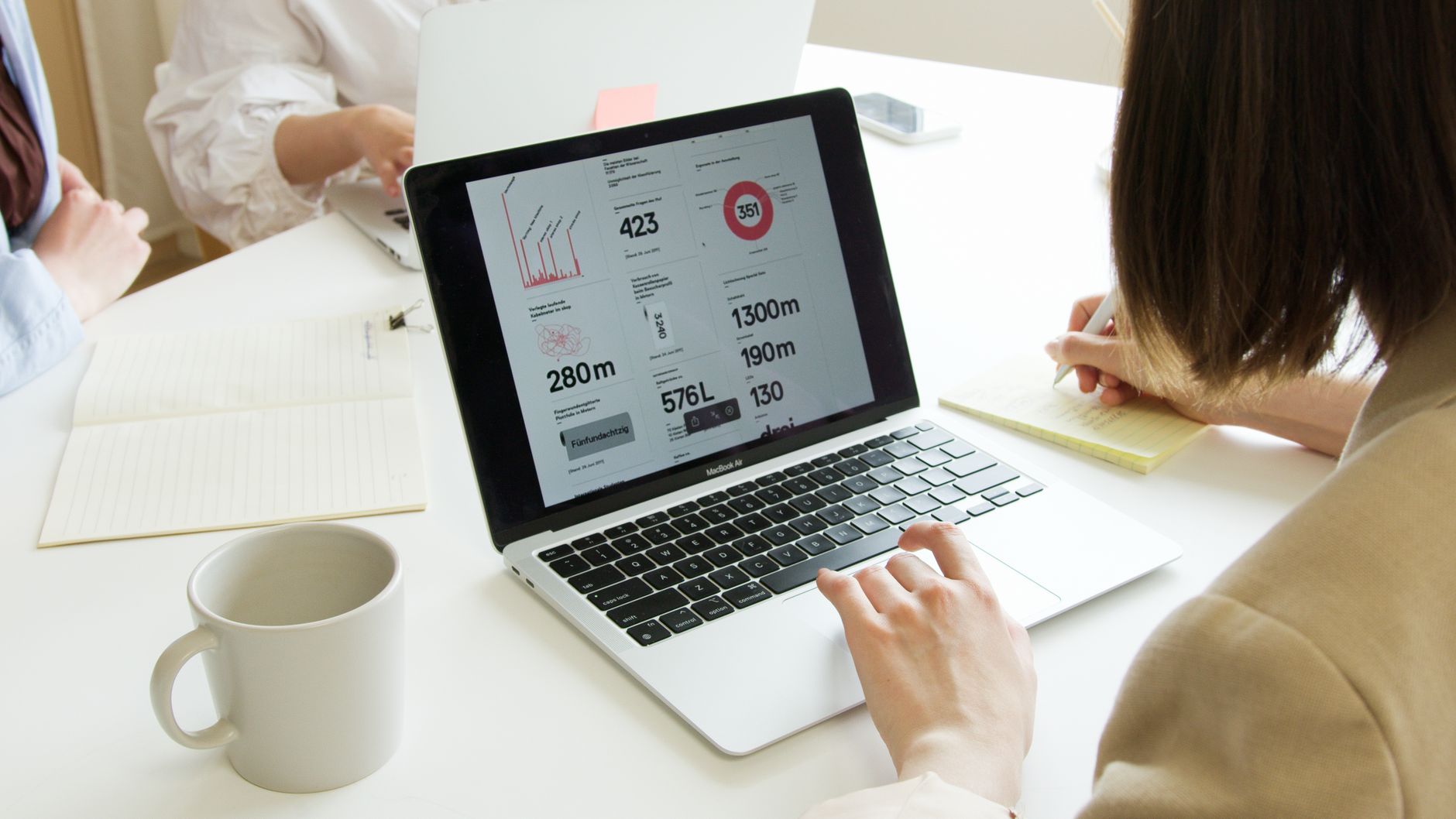
Voice dictation: the innovation that saves time
Voice dictation is Quickote's central feature. Rather than filling in fields one by one, you describe your service aloud. The application then transforms this description into structured quote lines. For a freelancer who has back-to-back client meetings, this changes the evening administrative routine. It's especially the repetitive fields that are burdensome, those that are re-entered for each new document:
- the service title,
- the quantity and price,
- the client's contact details.
This is precisely what dictation aims to eliminate.

Creating a quote in less than a minute: step-by-step process
Concretely, creating a quote follows a short sequence. You open the application, dictate or enter the essential information: the client, the service, the price. Quickote structures these elements into a ready-to-use document. The minimum required information remains classic: client identity, service description, amount. Personalization, on the other hand, does not require an additional imposed step. You can adjust the content before sending, without starting from a blank page. It is this streamlined sequence, reduced to the essentials, that allows the 60-second promise to be kept, at least for a simple quote for a common service.
Generated formats: Professional PDF and Factur-X
Once the quote is validated, Quickote produces a neat PDF, ready to be sent to the client. For invoices, the application also generates a file in Factur-X format. Factur-X is a hybrid electronic invoice format, which combines a human-readable PDF and structured data readable by accounting software. This dual format addresses a specific challenge: remaining readable for your client, while complying with the technical requirements of the electronic invoicing reform. For a micro-entrepreneur, this means that the same file can serve as a presentable commercial document and a technical component compliant with future dematerialized exchanges.
What is a motivating app and how does it really change things?
Invoicing is never the favorite part of a freelancer's job. Quickote starts from this observation to introduce an unusual dimension into management software: gamification. The idea is inspired by sports applications, where each outing feeds a progression curve. Here, each quote, each invoice, each reminder becomes an action that nurtures a visual tracking of activity.
Gamification inspired by Strava: progression systems and rewards
On Strava, a well-known sports application, each run or bike ride feeds statistics and milestones. Quickote adopts this principle to apply it to a freelancer's commercial activity. Visual progression elements provide an immediate reading of the activity, much like a mileage counter. The analogy is not gratuitous: it plays on a known psychological trigger, seeing one's progress makes one want to continue. For a micro-entrepreneur alone in front of their computer, without a colleague to push them, this type of visual benchmark can make a real difference in regularity.
Tracking your progress and staying motivated throughout the year
Beyond the playful aspect, the tracking logic serves a concrete objective: to maintain a clear vision of one's activity. A dashboard showing sent quotes, issued invoices, and reminders helps ensure nothing slips through the cracks. For a freelancer, invoicing regularity has a direct impact on cash flow. An invoice issued on time means an earlier payment. Visualizing one's own progress, month after month, also helps set realistic personal goals, rather than suffering administrative tasks in bursts at the end of the quarter.
Why invoicing finally becomes a positive habit
Administrative procrastination affects almost all freelancers at one time or another. Filling out a quote is not urgent as long as the client doesn't follow up. The result: the task accumulates, then becomes burdensome. Quickote's bet is to shift the trigger. Rather than invoicing out of obligation, under pressure from a client or a tax deadline, the user invoices because the action is quick and because consistency is valued. This shift, from constraint to a form of personal training, distinguishes a motivating application from a simple management tool.
Is Quickote really compliant with the Factur-X 2026 reform?
This is the question to ask before choosing an invoicing tool. The electronic invoicing reform imposes a precise calendar, and poorly prepared software can become a problem when the obligation applies. Here's what the reform actually covers, and where Quickote stands.
The Factur-X 2026 reform: what every freelancer needs to understand
The electronic invoicing reform progressively obliges all VAT-registered companies to receive, and then issue, their invoices in a structured electronic format. Factur-X is one of the recognized formats for this transition. The calendar distinguishes two very different obligations: receiving electronic invoices, and issuing them. Receiving an electronic invoice concerns all companies, including micro-enterprises that do not yet invoice VAT to their clients. Issuing an electronic invoice follows a different calendar depending on the size of the company.
Quickote's status: where are we really?
Quickote génère vos factures au format Factur-X. Le raccordement à une Plateforme Agréée, nécessaire à l'émission obligatoire de septembre 2027, est en cours de finalisation.
An Approved Platform is an operator registered by the DGFiP, authorized to transmit electronic invoices between companies and to the tax administration. It is this status, and not any certification of the Factur-X format, that will determine the issuance of invoices fully compliant with the reform. Factur-X remains a file format: no certification bears this name. For a micro-entrepreneur preparing for electronic invoicing, this nuance deserves to be understood before choosing a tool.
When do you become mandatorily subject to electronic invoicing?
The calendar is read in two dates, depending on the company's profile:
| Profile | Mandatory reception | Mandatory issuance |
|---|---|---|
| Micro-enterprise, VSE, SME | September 1, 2026 | September 1, 2027 |
| Large company, ETI | September 1, 2026 | September 1, 2026 |
In case of a non-compliant electronic invoice, the fine amounts to €15 excl. VAT per invoice, with a cap of €15,000 excl. VAT per year. The first offense is exempt if compliance occurs within 30 days. A failure to transmit data to the administration, called e-reporting, exposes to a fine of €250 excl. VAT per missing transmission, within the same annual limit of €15,000 excl. VAT.
A confusion often arises among freelancers: mixing the retention period for tax documents, 6 years, with that for accounting records, 10 years from the end of the financial year. This second period also applies to micro-enterprises, and it will have a direct effect on the archiving of electronic invoices once the reform is fully applied.
Quickote compared to other solutions: where is the real interest?
The market for invoicing software for freelancers is not short of options. What truly distinguishes Quickote is measured on three concrete levels: creation speed, daily user experience, and compliance trajectory.
Creation speed: the challenge met in the market
Most classic invoicing software requires filling out a complete form: client, service lines, VAT, payment terms. This generally takes several minutes, especially for a new user discovering the interface. Quickote relies on voice dictation to compress this step. The promise of a quote in less than 60 seconds does not concern complex files with multiple lines, but it changes the game for common services, those that come back every week with minor variations.
User experience: the invisible that changes everything
Speed is useless if the tool remains complicated to use. An interface designed for voice naturally reduces the learning curve: no menu to explore, no hidden fields. For a freelancer without particular technical skills, this is often what makes the difference between a tool adopted long-term and software abandoned after two trials. The pleasure of use also counts. A polished design, visible progress, quick action: these are details that, combined, make you want to open the application rather than postpone it.
Compliance and sustainability: being reassured about the future
Choosing an invoicing tool also means betting on its ability to follow regulatory developments. Quickote already produces files in Factur-X format and is working on its connection to an Approved Platform, a necessary step before the issuance obligation of September 2027 for micro-enterprises. This is a useful head start, but it remains a work in progress, not an achievement. A freelancer choosing their tool today should follow their publisher's communications on this connection, rather than considering the matter definitively settled.
How much does it cost and how to try it without commitment?
For a micro-entrepreneur, the cost of an invoicing tool must remain proportionate to the turnover generated. This is a criterion as important as input speed or regulatory compliance.
Pricing plans explained simply
Quickote positions its offer for freelancers, self-employed, and small businesses, with a subscription designed to be simple to understand. The challenge for this type of tool is not to pile up complex options, but to cover the essentials: creating quotes, editing invoices, tracking activity. Prices and tiers evolve over time. The most reliable way is to consult them directly on the dedicated page at the time of subscription, rather than relying on a fixed figure in an article.
Trying Quickote without commitment: how does it work?
Before committing, the best approach is to test the tool on real cases: a quote for a regular client, a standard invoice. This allows judging the announced speed on one's own activity, not on a generic demonstration. A micro-entrepreneur who hesitates between several tools benefits from comparing the actual time spent on each, for the same quote, before making their final choice.
What do micro-entrepreneurs who use Quickote really say?
The best test of an invoicing tool is not its product sheet, but the daily use made of it by those who use it. What freelancers say about Quickote, the invoicing app made in Monaco that motivates freelancers, generally converges on three points.
Real time savings according to users
The most sought-after benefit with this type of tool is the time saved on administration. For a freelancer who invoices several clients each week, a few minutes saved on each quote represent, put together, hours recovered over a month. This time is generally used for two things: more billable missions, or more rest, which is just as important for the health of a solo activity.
Gamification: motivating myth or real transformation?
A progression system does not convince everyone in the same way. Some freelancers actively use it, like a dashboard that pushes them not to let a quote drag. Others look at it more distantly and focus mainly on input speed. In both cases, the desired effect remains the same: that invoicing ceases to be a task postponed to the end of the month, in urgency.
Factur-X compliance: no more regulatory anxiety
The electronic invoicing reform worries some freelancers, often because the subject remains poorly explained. Knowing that a tool already produces files in Factur-X format, and is preparing its connection to an Approved Platform, reassures on a specific point: the document format will not need to be redone when the obligation applies. This does not erase the need to follow the legal calendar, but it removes some of the daily technical uncertainty.
In summary
Quickote relies on voice dictation to reduce quote creation to less than 60 seconds, and on Strava-inspired gamification to make invoicing less burdensome. Its compliance with the Factur-X 2026 reform is progressing, with a connection to an Approved Platform still being finalized. For a micro-entrepreneur looking to save time without losing sight of the legal calendar, the tool deserves a test on real cases before any long-term commitment.
Frequently asked questions
Sources
- Entreprendre — Service-Public (business procedures)
- Auto-entrepreneur — contributions and declarations (Urssaf)
- Taxes — professional area
- Electronic invoicing (impots.gouv.fr)
Create your first quote in 60 seconds
Try Quickote for free: quotes and invoices by voice dictation, motivating activity tracking, designed for freelancers.
Essayer Quickote gratuitement