
Micro-entreprise: the expensive mistakes (and how to avoid them with Quickote)
Identify the shortcomings that threaten your activity and learn how to protect yourself without becoming an accountant.
In brief: Identify the shortcomings that threaten your activity and learn how to protect yourself without becoming an accountant.
Note: this article describes French rules and figures (tax thresholds, social contributions, e-invoicing schedule). They do not apply outside France.

In brief: The most expensive mistakes in a micro-entreprise are omitting turnover, non-compliant invoicing, and forgetting supporting documents. Each leads to quantifiable and avoidable penalties with regular management, not vague threats. A micro-entreprise remains subject to the same invoicing and document retention rules as a traditional company. The simplicity of the social and tax regime does not exempt it from any obligations. Here are the mistakes that cost micro-entrepreneurs dearly, and how to avoid them with Quickote, without becoming an accountant.
The 5 most expensive mistakes for micro-entrepreneurs
The micro-entreprise is a simplified tax and social regime for sole proprietorships, which lightens accounting obligations without eliminating them. Five shortcomings occur most often: they concern declaration, invoicing, and archiving.

Omitting or under-declaring your turnover
A micro-entrepreneur declares their collected turnover, not invoiced. Many make the mistake of adding up their issued invoices, whereas only the money actually received counts for the declaration. An under-declaration, whether voluntary or not, exposes one to a reassessment of social and tax contributions. If the omission is judged deliberate, a 40% surcharge applies, increasing to 80% in the event of fraudulent manoeuvres or undeclared activity. An isolated oversight, however, is simply corrected during the next declaration.
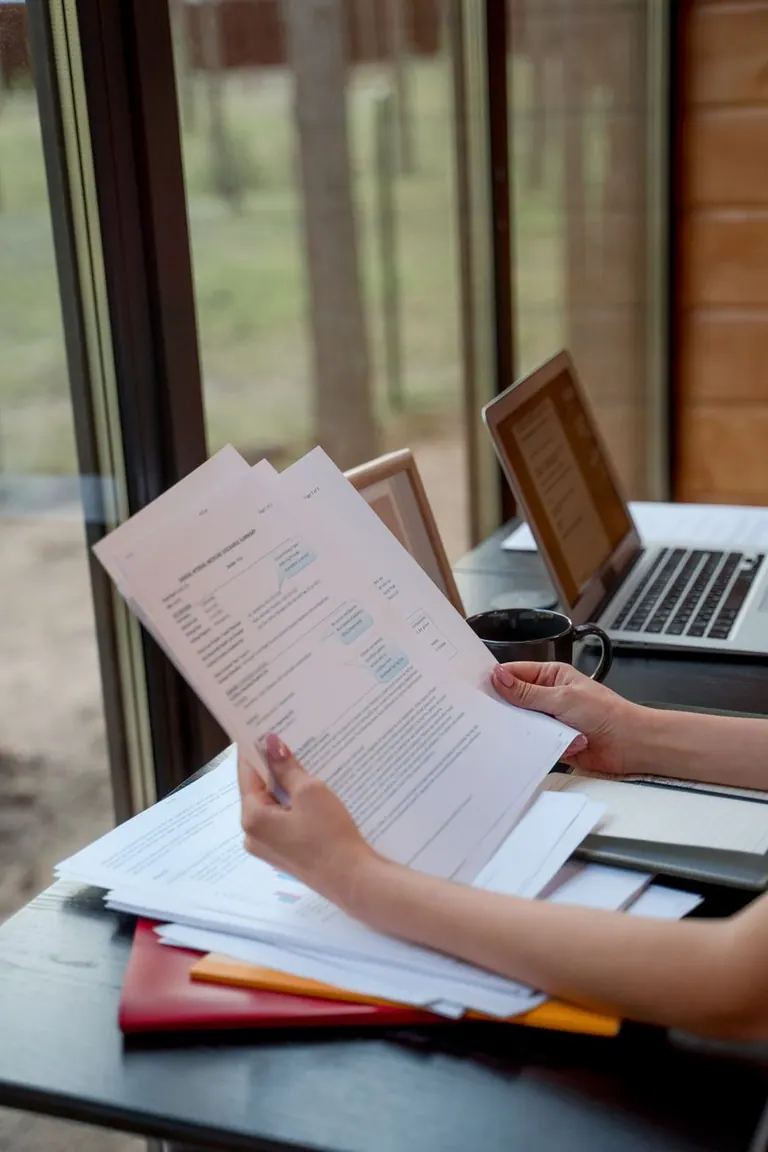
Incorrectly invoicing or non-compliant invoicing
An invoice must include precise details: unique and continuous number, date, identity of both parties, detail of services, payment deadline. Many micro-entrepreneurs improvise their invoices in a simple word processor, without sequential numbering. In many cases, the most frequent error observed in practice remains the omission of the payment deadline, which is nevertheless a mandatory mention. A non-compliant electronic invoice incurs a fine of €15 excluding VAT per invoice, capped at €15,000 excluding VAT per year. The first irregularity is exempt if compliance occurs within 30 days.
Confusing turnover and taxable profit
Turnover is the total amount collected for sales or services rendered, before any allowance. Taxable profit, on the other hand, corresponds to this amount after a flat-rate allowance for expenses has been applied. Many micro-entrepreneurs declare their turnover thinking they have calculated their tax. This is not the case: the administration automatically applies the allowance, then calculates the remaining income tax. Confusing the two mainly complicates cash flow anticipation, not the declaration itself.
Forgetting to keep supporting documents
In the event of a tax audit, the burden of proof rests with the micro-entrepreneur. Without an invoice or proof of purchase, it's impossible to prove the reality of an expense or a sale. Accounting documents must be kept for 10 years from the end of the financial year, including for micro-entrepreneurs. Tax documents must be kept for 6 years. Paper format is still valid, but digital format facilitates searching and prevents physical loss of a document. An audit without available supporting documents leads to an official assessment, calculated directly by the administration.
Ignoring electronic invoicing obligations
The electronic invoicing reform imposes a precise timetable. On 1 September 2026, the reception of electronic invoices becomes mandatory for all VAT-registered entities, including micro-entrepreneurs who do not invoice VAT to their clients. The obligation to issue follows a differentiated timetable: 1 September 2026 for large companies and ETIs, 1 September 2027 for SMEs, VSEs, and micro-entrepreneurs. Waiting until the last deadline to equip oneself leaves little time to change tools and invoicing methods.
How many penalties could I face in case of non-compliance?
Penalties related to micro-entreprises are precisely quantified. Knowing them allows compliance to be seen as an investment, not as a vague constraint.
Fines for non-compliant invoices
A non-compliant electronic invoice costs €15 excluding VAT, capped at €15,000 excluding VAT per year. A failure in e-reporting, the transmission of certain transactions to the administration, costs €250 excluding VAT per missing transmission, with the same annual cap. The first recorded infraction is exempt if compliance occurs within 30 days.
| Non-compliance | Amount | Annual cap |
|---|---|---|
| Non-compliant electronic invoice | €15 excl. VAT per invoice | €15,000 excl. VAT per year |
| Failure in e-reporting | €250 excl. VAT per missing transmission | €15,000 excl. VAT per year |
Late payment penalties and surcharges
Between professionals, the default payment term is 30 days, unless otherwise agreed between the parties. The law caps this period at 60 days from the invoice date, or 45 days end of month. Beyond that, late payment penalties apply: a minimum rate of three times the legal interest rate, plus a flat-rate recovery indemnity of €40 per invoice. These two amounts are cumulative, invoice by invoice for unpaid ones.
Surcharges for deliberate non-compliance
A good faith error is corrected without heavy penalties. Deliberate non-compliance changes the game: the surcharge reaches 40% of the sums due. It climbs to 80% in the event of fraudulent manoeuvres or undeclared activity, meaning an activity not declared at all. The best protection remains a regular and sincere declaration, even if approximate in case of temporary doubt.
What documents should I keep and for how long?
Document retention protects in case of an audit. It distinguishes two categories, with two different durations.
The legal retention period
Accounting documents, invoices, professional bank statements, expense receipts must be kept for 10 years from the end of the financial year. This duration also applies to micro-entrepreneurs, despite the simplicity of their accounting. Tax documents must be kept for 6 years. Paper format remains valid, but digital format facilitates searching and prevents the physical loss of a document.
Essential supporting documents
Certain documents take precedence over others in the event of an audit. Issued and received invoices come first, followed by statements from the dedicated business account. Contracts with clients or suppliers come next, along with administrative exchanges related to a dispute or a declaration. A simple order helps to prioritise:
- Sales and purchase invoices
- Professional bank account statements
- Signed contracts and quotes
- Correspondence and exchanges with the administration
Organising your archives simply
A digital folder per year, classified by month, is sufficient for most micro-entrepreneurs. Naming each file with the date and client name facilitates quick searching. Regular backup, on a separate space from the main computer, prevents loss in case of failure. A quarterly check, just a few minutes, helps to spot a missing supporting document early.
How to check that my management is compliant throughout the year?
A few regular checks prevent most of the expensive mistakes. Here are the points to tick, and the signals that should alert you.
The 5 control points to check regularly
- Invoice numbering is continuous, with no gaps or duplicates.
- Each invoice includes mandatory mentions: dates, identities, payment deadline.
- Declared turnover matches actual bank account receipts.
- Invoicing and receipt dates are consistent with declarations.
- VAT, if applicable, is correctly mentioned according to the current regime.
A monthly check of these five points is enough to maintain sound accounting all year round.
Identifying warning signs of failing management
Some signs are unmistakable. A growing discrepancy between projected turnover and actual turnover merits examination. Accumulating unpaid invoices without follow-up signals insufficient commercial tracking. A personal bank account mixed with professional receipts complicates any future verification. A lack of traceability, lost invoices or missing supporting documents, makes an audit much longer to prepare.
How to simplify your management without hiring an accountant?
Most of these errors are corrected with simple habits, not with complex accounting.
The 3 essential best practices
Three habits are enough to secure a micro-entreprise. Separating a bank account dedicated to the activity simplifies every verification. Invoicing systematically, from the first service, avoids end-of-month oversights. Archiving as you go, rather than at the end of the year, reduces the risk of missing documents.
Automating invoicing and declarations
An automatic invoicing tool prevents numbering errors and mandatory mentions. It helps track declaration deadlines and ensures they are not missed. It also reduces the time spent each month on repetitive tasks, freeing up time for billable work. Automation does not replace human verification, but it limits mechanical oversights.
Why Quickote changes micro-entrepreneurs' daily lives
Quickote allows you to create a professional quote in less than 60 seconds, then generate the corresponding invoice. Quickote génère vos factures au format Factur-X. Le raccordement à une Plateforme Agréée, nécessaire à l'émission obligatoire de septembre 2027, est en cours de finalisation. For a micro-entrepreneur who wants to spend less time on administration and more time on their craft, these few seconds saved with each quote add up over an entire year.
In summary
The most expensive mistakes in a micro-entreprise are corrected with regularity, not with advanced accounting expertise. Correctly invoicing, declaring actual turnover, and archiving supporting documents are enough to avoid the majority of penalties. A tool like Quickote automates the most sensitive part, invoicing, to allow more time for the actual business.
Frequently asked questions
Sources
- Mistakes not to make when creating a micro-entreprise
- 10 common pitfalls to avoid as a micro-entrepreneur | Shine
- Entreprendre — Service-Public (business procedures)
- Auto-entrepreneur — contributions and declarations (Urssaf)
- Taxes — professional area
- Electronic invoicing (impots.gouv.fr)
Avoid expensive mistakes
Quickote secures the numbering, mentions, and tracking of your documents for error-free management.
Essayer Quickote gratuitement