
The administrative Friday: the method to complete all your management in 30 minutes
Concentrate your independent management into a fixed weekly slot: clarify your legal obligations, forget nothing, and find peace of mind the rest of the time.
In brief: Concentrate your independent management into a fixed weekly slot: clarify your legal obligations, forget nothing, and find peace of mind the rest of the time.
Note: this article describes French rules and figures (tax thresholds, social contributions, e-invoicing schedule). They do not apply outside France.

In brief: An independent's administrative management can be confined to a single, fixed 30-minute slot per week, provided the same sequence is always followed. This method, often called the administrative Friday, groups quotes, invoices, reminders, and archiving into a single, non-negotiable block. It prevents constant interruptions and the mental burden of "I need to remember to invoice so-and-so". This guide details the exact content of the slot, the order of tasks, time-saving tools, and errors that can cause the system to fail.
Why block a fixed administrative slot each week?
Dealing with administrative tasks as they come up seems logical. However, it's the most energy-intensive method. Each interruption to send an invoice or check a payment breaks your concentration on your real work. It then takes several minutes to regain your focus on the task at hand.
Blocking a fixed slot eliminates this constant context-switching. You know that administrative tasks have their place, once a week. The rest of the time, your mind remains available for your clients and projects.
This organisation also brings a sense of mental serenity. No more wondering, in the middle of the evening, if a particular invoice has been sent. You know exactly when you deal with this subject, and you know that nothing is left outstanding beyond that moment.
An independent's administrative management often includes repetitive, low-value-added tasks, but with a high impact if forgotten. An unsent quote delays a mission. An unrecalled invoice delays a payment. By grouping them into a single block, you significantly reduce the risk of forgetting, as you systematically review the same points each week.
Finally, this way of working gives you complete control over your activity. You know your cash flow, your unpaid invoices, and your up-to-date legal deadlines, every week, without effort of memory.

What administrative tasks should you actually do each week?
Administrative management for an independent is not just about invoicing. It comprises three distinct families of tasks, which it's best to differentiate so as not to forget anything.
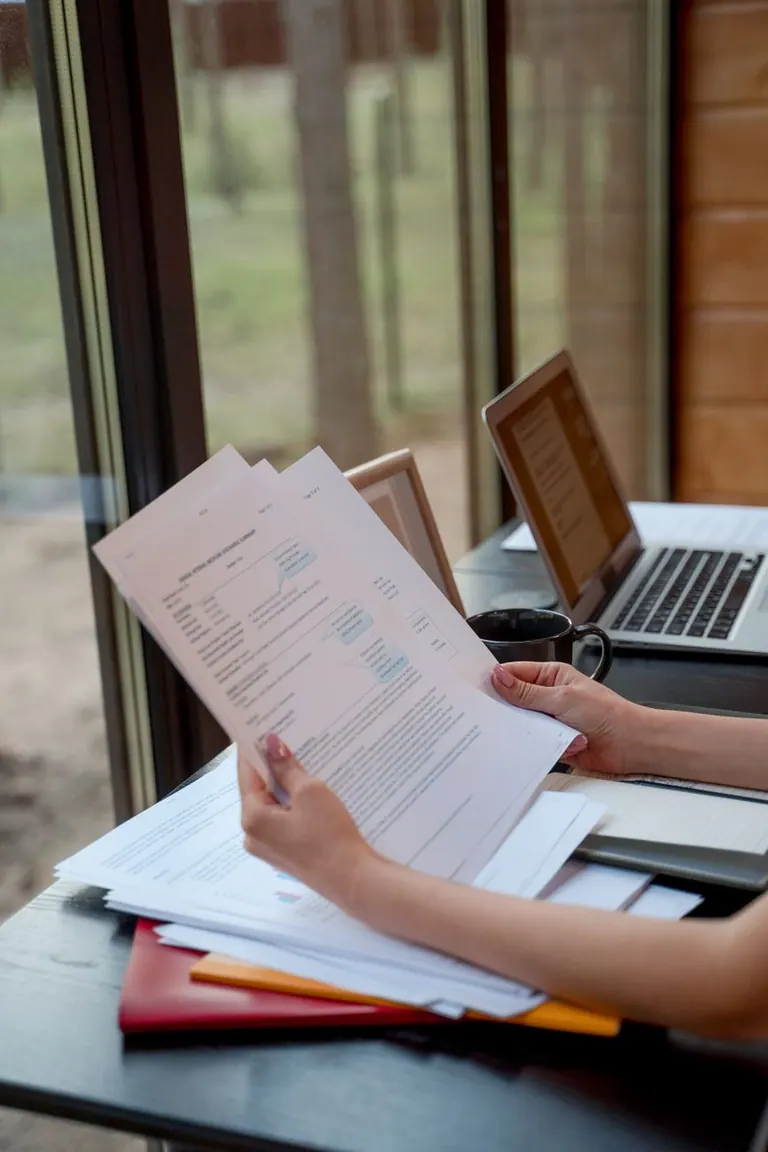
Operational tasks
This is the core of the slot: creating the week's quotes, creating and sending invoices for completed missions, checking received payments, and sending reminders for unpaid invoices. These are the tasks that have a direct impact on your cash flow.
Recurring legal obligations
Sole traders (auto-entrepreneurs) must declare their turnover on a monthly or quarterly basis, chosen with Urssaf, and pay the corresponding contributions. This point requires regular checking to avoid two or three deadlines accumulating.
All independents are affected by the electronic invoicing reform. The deadline for receiving electronic invoices is 1st September 2026, for any VAT-registered business, including micro-entreprises exempt from VAT. On the issuance side, the obligation starts on 1st September 2026 for large companies and ETIs, and on 1st September 2027 for SMEs, VSEs, and micro-entreprises.
Legal archiving is also part of this block. Accounting documents must be kept for 10 years from the end of the financial year. This period also applies to micro-entreprises.
Administrative maintenance
This is the most often neglected part: updating a client's record if their address has changed, filing documents received during the week, tidying up an expense receipt, preparing documents to send to the accountant. These tasks only take a few minutes, but they quickly accumulate if postponed.
How to actually stick to 30 minutes: the checklist in order
Sticking to 30 minutes is not magic. It requires a fixed sequence, always in the same order, to avoid back-and-forth movements that waste time.
Minutes 0–5: quick financial diagnosis
Open your cash flow tracking tool. Look at the movements of the past week. Spot at a glance the invoices that are still unpaid and those yet to be issued. This diagnosis provides the roadmap for the rest of the slot.
Minutes 5–18: issue all documents
This is the longest and most important block. Create pending quotes, send them. Create invoices corresponding to delivered missions, send them too. Archive each document as you go, without waiting until the end. Check acknowledgements of receipt if your clients send them. A pre-filled template and voice dictation allow you to move quickly through this step, without retyping the same information each week.
Minutes 18–26: follow up and update
Send reminders for invoices that have exceeded their payment due date. Use your pre-prepared reminder templates, without rewriting them. Update your expected payment tracking file, to know who owes what and when.
Minutes 26–30: close and prepare
Archive documents received during the week, supplier invoices or receipts. Update your client database if necessary. Note any reminders to plan for the following week. Close all open files before moving on to something else.
What tools to use to really stick to 30 minutes?
Time saved comes primarily from tools, not just discipline.
Templates and automatic numbering
Prepare a quote template and an invoice template once and for all, with your logo, address, and commercial terms already present. Let the automatic numbering create your document series. You only need to fill in the part specific to each mission.
Voice dictation for quotes
Instead of typing each line, verbally describe the mission: description, price, deadline. Quickote, for example, offers to create a complete quote by voice dictation, in less than 60 seconds according to the application. This approach avoids manual re-entry, often the most time-consuming part of the administrative slot for independents discovering the method.
Quickote génère vos factures au format Factur-X. Le raccordement à une Plateforme Agréée, nécessaire à l'émission obligatoire de septembre 2027, est en cours de finalisation.
Pre-written templates for reminders
Write three or four reminder templates once and for all: a first courteous reminder, a firmer reminder, a final reminder before escalation. On the day of the slot, you copy the appropriate template and only adjust the name and amount.
Block distractions
Put your phone out of reach or in airplane mode. Close your email inbox except for documents to send. Turn off notifications. Display a visible timer on the screen. Keep only one application open at a time, the one for the current task.
What day and time should this administrative slot be scheduled?
The right slot depends on your rhythm, your clients' availability, and your current energy levels.
Friday late afternoon or Monday morning?
Friday between 4 pm and 4:30 pm allows you to close the week properly. You avoid sending reminders just before the weekend, a time not conducive to a quick response. Monday between 8:30 am and 9 am benefits from fresher energy, with the whole week ahead. The downside: your clients are also starting their week and are often less available to respond.
The key: block it in your diary
The slot must be treated as a professional appointment, just like a client meeting. It should not be moved for a minor unforeseen event. You can also communicate this organisation to your clients, with a simple sentence on your website or email signature: "All quotes and invoices are processed on Friday."
How to prevent administrative tasks from disrupting the rest of your week?
The slot only works if the rest of the week remains protected.
Say no to out-of-slot requests
A client calls on Tuesday for a quote. Note their request immediately, so you don't forget anything. Simply reply: "I will deal with that on Friday, and I'll get back to you then." This response remains firm and courteous at the same time.
Disable administrative notifications
Turn off email alerts related to invoicing. Delete cash flow reminders that appear outside the slot. Reserve consulting these tools only for the administrative Friday slot.
Clearly announce deadlines
On your quotes, specify that requests are processed every Friday. On your professional email address, indicate a clear response time, for example 48 hours, with effective processing starting from the scheduled slot. This transparency avoids impatient reminders from your clients.
What if 30 minutes isn't enough in the first few weeks?
That's normal, especially at the beginning. The 30 minutes are a goal, not an immediate constraint.
Identify what really takes time
The blockage rarely comes from the same cause for everyone. Is it the creation of documents that drags? The search for information scattered across multiple files? The manual archiving of received documents? Identify the heaviest point and correct it first.
Dedicate two sessions in the first few weeks
For the first two weeks, plan two shorter appointments: 15 minutes on Monday to prepare, 20 minutes on Friday to finalise. From the third week, group everything into a single 30-minute block on Friday.
Re-evaluate tools and habits
If the time doesn't decrease, change your tool rather than forcing the method. Simplify your tracking processes. Increase the frequency of reminders if unpaid invoices accumulate from one week to the next. The goal remains to go faster, not to respect a duration at all costs.
Pitfalls to avoid for the system to hold
Certain errors often recur and weaken the method.
Do not divert the slot to other tasks
The administrative Friday is only for the five or six tasks identified above. Website redesign, prospecting, training, or strategic thinking deserve another time, not this specific slot.
Skipping a week or regularly rescheduling
Skipping a week seems harmless. But accumulated administrative tasks always come back heavier the following week. It's better to keep the slot even when there's little to do, to maintain the habit intact.
Sticking with manual and slow tools
A spreadsheet for invoices, no structured payment tracking, handwritten reminders every time: these habits make 30 minutes unrealistic. Saving time on an independent's administrative management first involves using appropriate tools, even before personal discipline.
Conclusion: the freedom of concentrated administrative work
The administrative Friday is not an additional constraint. It's a way to regain control over a part of the work often endured rather than chosen. A fixed sequence, tools that speed up document creation, and clear boundaries with your clients are enough to transform this burden into a predictable appointment. Try a first week, adjust the duration if needed, and let the method stabilise itself.
In summary
Concentrating an independent's administrative management into a fixed 30-minute slot reduces mental burden and secures your deadlines. Start with the four-block sequence, adapt the duration in the first few weeks if necessary, and equip yourself with tools that eliminate manual re-entry. The hardest part is not sticking to 30 minutes, it's keeping the appointment every week, without exception.
Frequently asked questions
Sources
- Entreprendre — Service-Public (business procedures)
- Sole Trader — contributions and declarations (Urssaf)
- Tax — professional area
- Electronic invoicing (impots.gouv.fr)
Complete your administrative tasks in 30 minutes
Create your quotes and invoices in less than 60 seconds with Quickote and free up your Friday.
Essayer Quickote gratuitement